
Published May 3, 2025.
Text Jonas Löf, photo Jonas Löf unless otherwise stated.
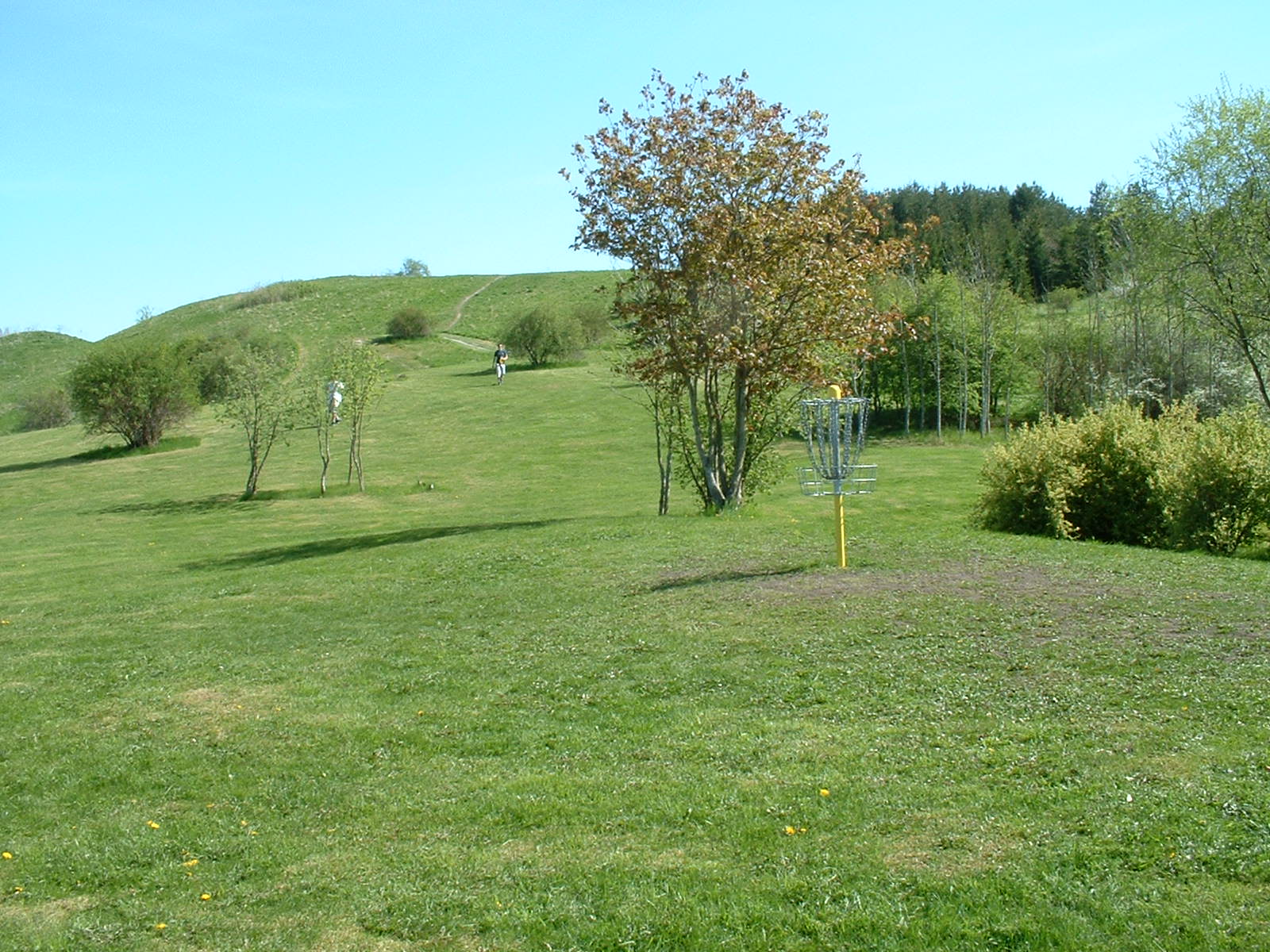
The years pass and some now call Järva Discgolf Park legendary. On May 4, 2025, Järva Discgolf Park will have been in existence for 30 years. It has been an eventful time with not only work that has affected the course but also in a larger perspective that affects the sport of disc golf. I have tried to make a selection of everything that has happened during these 30 years. Mats Löf started the planning for the course in 1993 and the physical work on site started in 1994. Mats has run the course as a business part-time and full-time and I have worked voluntarily with the project as much as time allows during all the years.
But Mats and brother Jonas have been involved in the sport long before 1995. Already in the late 70s, the brothers began to discover the fly frisbee (as it was then) and in 1979 we discovered disc golf. It was thanks to Johny Gustafson who had started the European Disc Golf Association and Europe’s first course on Kärsön west of Stockholm, 9 km from the future Järva Discgolf Park. EDGA was actually a marketing package more than a real association. The Kärsö course was inaugurated on May 20, 1979 and it was also a long feature in the TV sport from the inauguration. It was a big hit at the time with with millions of viewers since it was only two TV channels and of course no internet.
However, the feature did not portray it as a serious sport in the first place but more as a pastime and perhaps that was not so strange, the sport was completely new. Today, there are all aspects of disc golf: pastime, recreational sport and competitive sport.
EDGA had the entire package developed for this new sport. Course equipment, course design, competitions, rules, discs, clothing, bags, etc. In addition, strong marketing so the sport grew quickly in the beginning. At this time, Johny was the world leader in disc golf marketing.


According to EDGA’s information sheet, it only took a few days to plan and build the Kärsö course. Probably an understatement, but in principle it was the placement of sleepers as tee markings, tee signs and bunker holes in existing terrain. Lillsjö disc golf course, which we were involved in and later Järva, had the ambition that the entire course would be a cared for and managed cultivated environment.

.
In September 1979 the Stockholm Disc Golf Open was played on Kärsön. I was there as a spectator, a curious 16-year-old and thought this was a really good brand new sport! Johny Gustafson walked around with a megaphone during the final and told about the players, for example that some came directly from the World Cup in the USA. It felt like a big deal.
We started playing on the Kärsö course later in 1979, but also had our own, highly temporary course with trees as targets at home in Vattentornskogen in Kungsängen. The terrain here was similar to that on Kärsön.
Johny was the first in Europe with the sport in May 1979. He also had the world’s second disc golf competition with prize money: in September 1979 there was prize money at the Stockholm Discgolf Open. Kärsön then got baskets in May 1980, 4 years after the world’s first basket course in the USA.
When we started competing in 1980, we saw other courses and thoughts began to grow about the potential for having better courses. In Örebro in May 1980, we got to play on the Hästhagen course, which in comparison to Kärsön seemed like paradise. Kärsön was fun, but it had its flaws with a lot of tree trunks and roots that meant random bounces, rocks and stones that destroyed the discs and a generally difficult steep terrain that meant hardship, especially in rain and snow. If you missed the fairway, you could easily end up in such dense vegetation that it was barely possible to throw. In addition, the holes were short even for the discs of that time. The Hästhagen permanent course had large deciduous trees, lawns and an environment that was more conducive to longer precision games, than chance and hardship. However, the terrain lacked real differences in height and could also be cluttered with people in good weather.
We participated in the 1980 Swedish Championship in Halmstad. At that time, the Swedish Championship in disc golf was decided together with other individual disciplines, such as Freestyle. A separate Swedish Championship for disc golf only was not played until 1998. The Swedish Championship final was decided in the background and there were a few of us who ran away from another discipline to watch the last hole. The star of the day, Peter Jansson, won with an eight-meter putt. I remember thinking it was a big event, but it didn’t feel dignified with such a small audience, only a few other competitors and that it was decided on a temporary course with a final hole at the back of a school.

In September 1980 we participated in the Stockholm Disc Golf Open in Tantolunden which was a very professional event for its time and here it was also a nice park environment with proper elevation differences. The disadvantage of this course, however, was that they were laid out in a park that had an established visitor group before baskets and throws were placed. For example, there were many holes along or across park paths, by park benches etc., which is crazy even for a temporary course.

During the 1982 European Championship in Colchester, England, we got to play in the large, beautiful park Wivenhoe Park. Hilly terrain with nice lawns and large trees. We perceived this and other nice park environments as ideal for the sport of disc golf. Here you could control the disc more controlledly, the landing on the grass surfaces was not so random and here you could also let the disc fly long distances, let the wind help the disc to throw longer and more difficult curves and also roll the disc.
In 1982, Brunna Frisbee Club, where we were a part of, built the Lillsjöbanan course, 14 km from the future Järva Discgolf Park. It was a group of elite players in their 18s, unlike the one we thought was very old Johny, who was then 35 years old. This was the first course in Sweden that had not been built by Johny Gustafson or his assistants, for example Gerd Biesterfeld, 28 years old. The course was planned for the discs that existed at the time, which compared to today’s discs are completely different. The flight number for these discs would probably be something like this: 0 (Speed) 8 (Glide) -8 (Turn) -1 (Fade) The course was unusually long for its time with an average length of 100 meters and a 150 meter hole (the longest in Sweden at the time).
Initially, a group of people laid out the course, but the ongoing maintenance was forgotten, but I spent several hundred hours clearing and polishing during the 1980s.
We also organized the Lillsjötouren, Lillsjö Open and other competitions on the course and tried to get a broader player base than the few who played in the very few national competitions. The Flygar-golf on the Lillsjö course was probably the first competition in the country with separate amateur classes. As players on Lillsjön, we realized that a big problem was that you had to look for discs more than you played disc golf, so a strong desire was to have grass as a surface, but then the grass also needed to be cut regularly, which was easier said than done. The course was laid out with grass areas on the fairway and green.
Mats arranged nice tee signs for the course, but these were kicked apart almost immediately by irritated players. It felt like several elements were needed to improve the sport a little, better attitude on the course, etc. At this time, the grassrot sport was basically completely unbridled, so to speak.
The course is still there over 40 years later with almost the same course length.
During the WFDF World Disc Golf Championship in 1985, which has only been played once, Johny Gustafson and TD Gerd Biesterfeld succeeded in having live episodes and a rebroadcast on Saturday evening on Swedish National TV. A feat one might say and the sport was now presented as a real sport, but the course was in the Slottshagen park in central Helsingborg. Parts of the competition were, however, played on the permanent course in Brohult. This success in reaching a wider audience and not just being an obscure activity was something that attracted us.
With this experience from courses and competitions, we saw that a distinct arena for the sport of disc golf was needed and this has been an important purpose of the work with Järva Discgolf Park.
The Frisbee fly died out in early 1981 and the International Frisbee Association, which had started the fly and which had also largely organized disc golf, was closed down in 1982 and Johny Gustafson’s disc golf venture was withdrawn as income decreased drastically. So after this, there were a few young players in their teens who tried to keep the sport floating. With Johny Gustafsson and also Mikael Hjärtsjö being given significantly more withdrawn roles after the association moved to Gothenburg, there was a need to handle disc golf and other individual sports in a separate committee; the Individual Committee. After the World Championship 1985, there was no organization that could handle the increased interest. The Swedish Frisbee Association had joined the Swedish National Sports Federation in 1983, but the focus of the association was now on the team sport Ultimate after the association moved to Gothenburg in 1982.
I was involved in the first Individual Committee in 1983, which can be seen as an embryo of today’s disc golf association. The individual committee handled the 7 individual disciplines that included disc golf. Among others who were part of the IK was, for example, Mats Bengtsson.
The PDGA became a member association in 1984 and then became the strong force in the disc golf world and the force that crystallized disc golf as a separate discipline.
Johny and Gerd Biesterfeld made an attempt in 1984 and 1985 to try to get disc golf started with the Swedish Frisbee Association’s company AB Discen and the WFDF-WC in Helsingborg. However, AB Discen went bankrupt. Even after these major investments, there were a handful of young elite players who had to handle the competition part with rules, competition calendar planning, etc. At this time after the WFDF-WC, disc golf was very small in Sweden and even less so in Europe. It was really just a national competition activity at a minimal level and a few poorly managed courses. The rescue was in the USA where the PDGA began to grow and a relatively large young disc golf activity. With the PDGA’s magazine Discgolfer and perhaps especially the magazine Disc Golf World News, you could get a lot of inspiration. I was sometimes on the association’s board and then worked with information material about the recreational sport that was missing. For example, the few discs that were sold were just lying in piles in the stores with no information. The Internet did not exist so the dissemination of information was basically non-existent. I also produced a brochure about course construction and Sweden’s first course guide, etc.
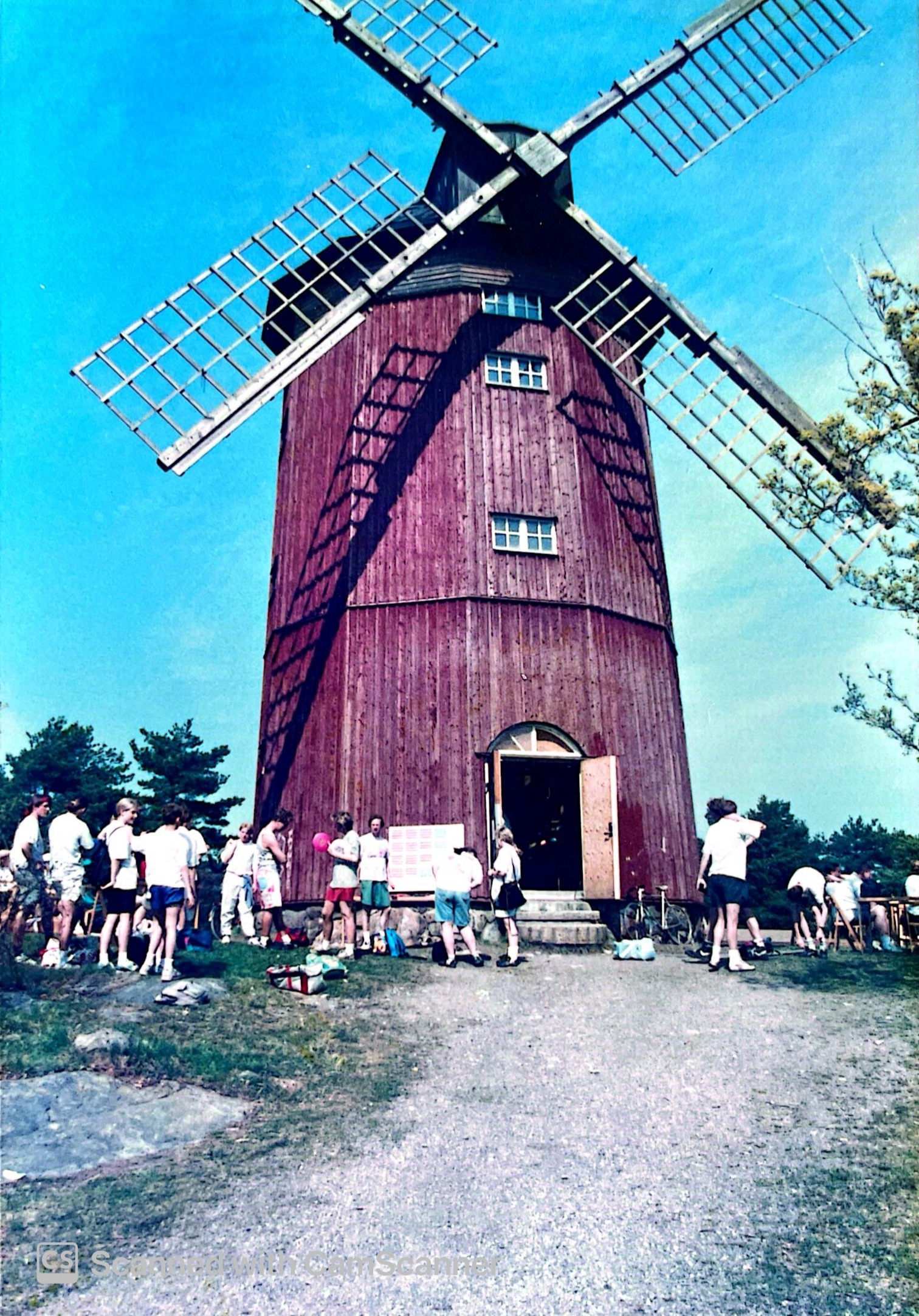
During the years 1987 to 1995, Kvarngolfen was played at Kvarnbacken, (4 km from Järva Discgolf Park) in Jakobsberg outside Stockholm. Mats was the initiator and Tournament Director.. This temporary course also raised thoughts of a pay to play course with a centrally located cafe etc. As mentioned, the course was on Kvarnbacken which had a windmill. In the mill there was a competition center, cafe and sales. It was a lot of work to prepare for a competition, to carry baskets etc. were not optimal for the organizers, who also played and then the course would be taken down and Mats was looking forward to having something similar, but permanent. At this time there were very few disc golf tournaments at a national level, and most were in connection with other frisbee disciplines such as Freestyle.
We even managed to get TV sports on in 1987. The sport had some media momentum after the 1985 World Championship, but it was a waning sport with very few competitors.


As mentioned I worked not only on a voluntary basis with competition activities but also with recreational issues. I was responsible for the Worlds Biggest Disc Golf Tournament, which was an American event, and I was responsible for Sweden’s playing venues and also for Kärsön. I stood on Kärsön for a few hours, asking players to sign up for lists and selling discs and t-shirts. Here I really noticed the interest there was in the sport, or rather the pastime and recreational sport. There was a steady stream of players and 150 of them signed up for the list during the day!

WBDGT 1992, 1993 changed it to Worlds Biggest Disc Golf Weekend which it is still called.
Mats and I realized that there should be a basis for another course in Stockholm, perhaps also for paying players. What I also noticed was that the players were mostly really happy amateurs, who didn’t know much about the rules etc. Later when Järva opened you could see which players came from Kärsön. A group of people ran around the course, after the first player threw out he ran straight after his disc, the second threw out and ran after his disc, then the third and so on. Most of the time they then threw at the other throws at the same time and the discs were hitting the other players. It went quickly and they had learned on Kärsön which was usually full of players in good weather. Between about 1982 and 2003 (when the Kärsö club started) Kärsön was basically abandoned and information about the sport was lacking in place. Not abandoned by the players though, but it was a completely unorganized activity for the most part during this time.
Another inspiration and role model was the Circle R course in Texas during the 1994 World Champions. Well-cut fairways among trees and groves of trees. However, the rough in the groves of trees would have to be cleared out, you had to be careful as there were lots of snakes, large spiders etc. in the jungle among the trees.
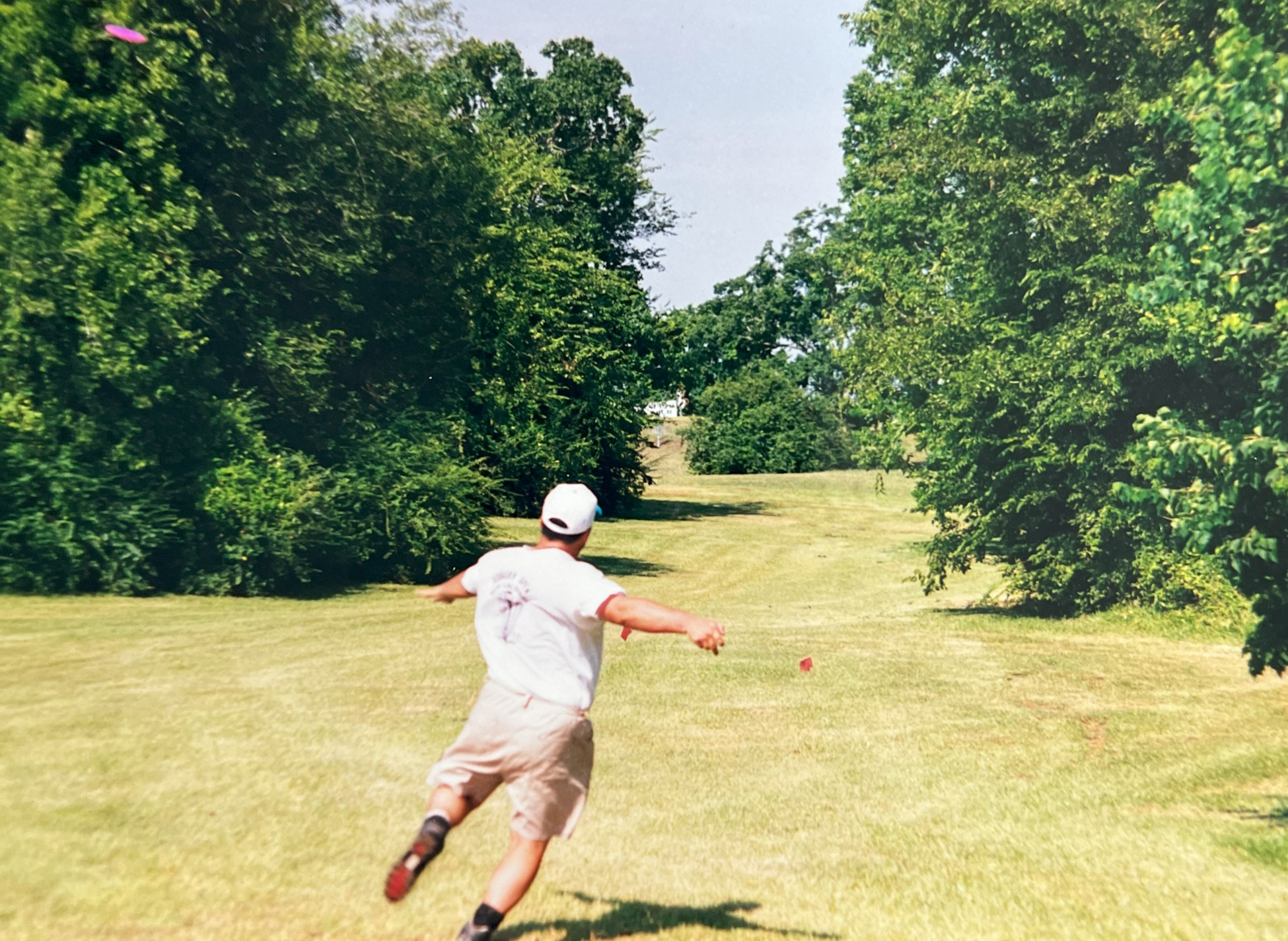
In 1994, Mats and Järva Discgolf Park received a usage agreement with the City of Stockholm where Mats undertook to freshen up the dilapidated, rubbishy area and create an attractive environment. This meant a very large task, often with simple hand tools, which has actually continued for all these 30 years.
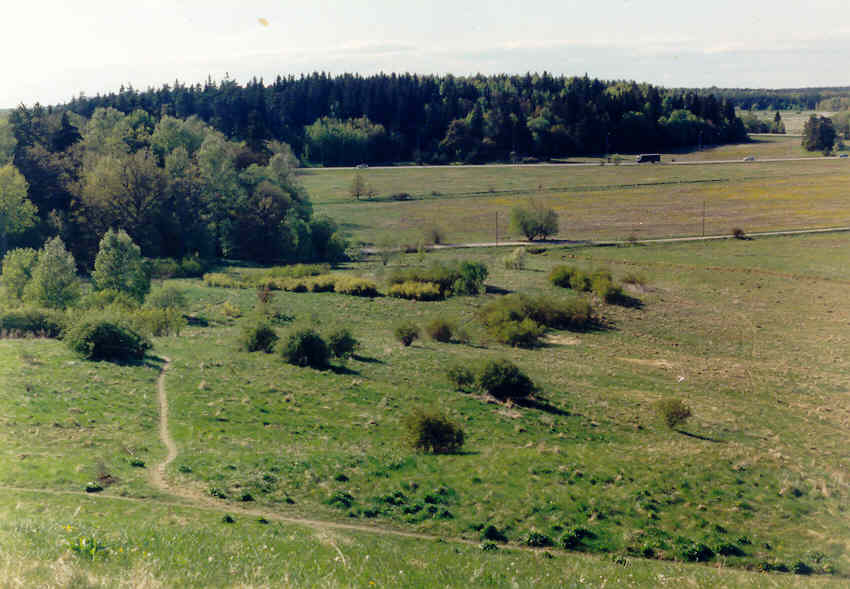
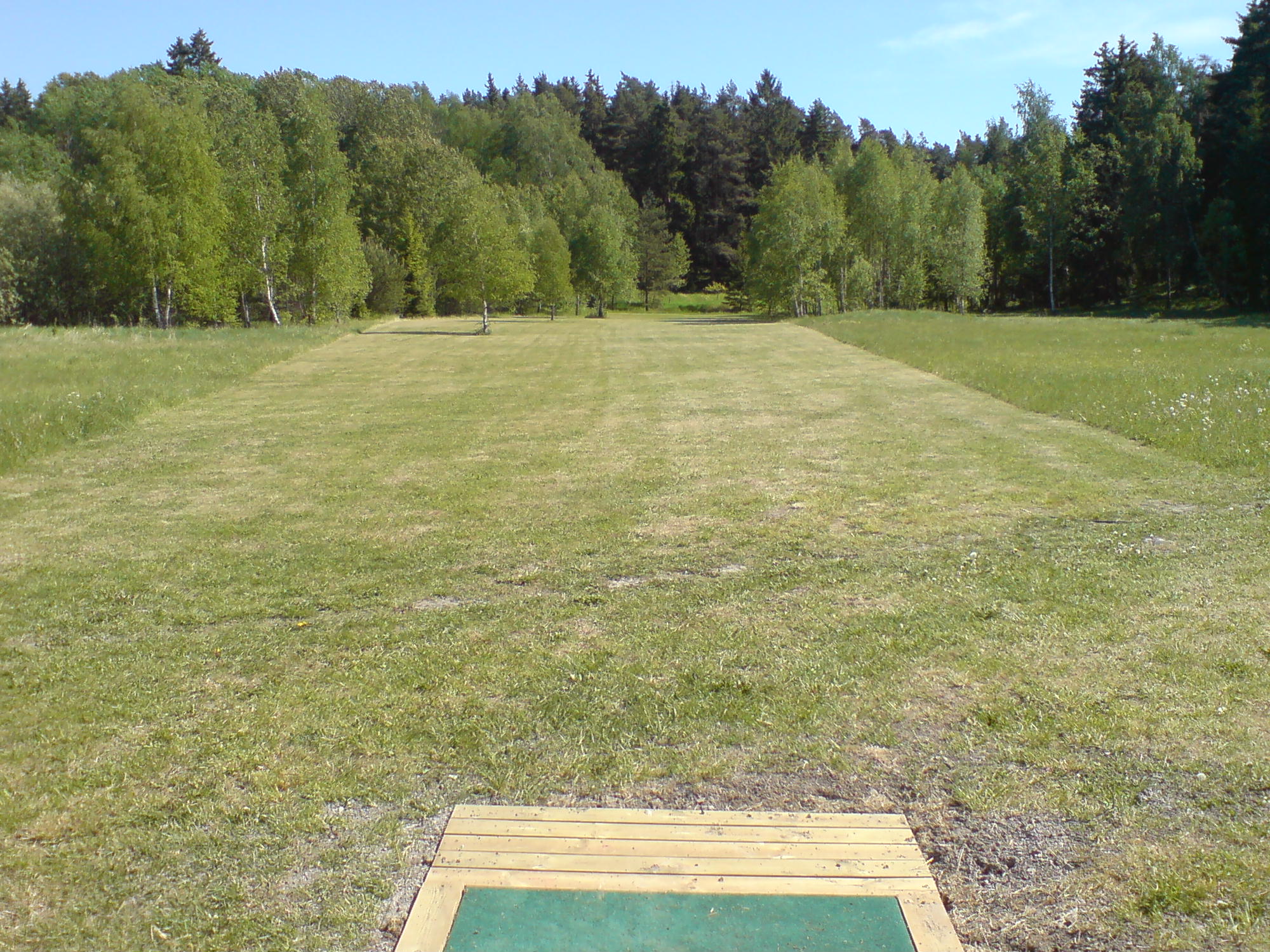
Järva was the second pay to play course in the world when it opened on May 4, 1995. The year before, Morley Field in San Diego had started charging fees. It was the first time the name Discgolf Park was used for a disc golf course. At that time, there were about 40 disc golf courses in Sweden and 500 in the world. Today, there are about 800 in Sweden and 16,000 in the world. The goal was a high-class course with a playing field of grass, on hilly ground and with as much variation as possible. The surface was initially very far from a nice park, but with a lot of work, the environment was transformed from an overgrown, trashy disgrace into a beautiful park. At first, the tee surfaces consisted of concrete, later of felt and since a few years ago of artificial grass. So the entire playing surface now consists of grass, you could say. The baskets also had color on the posts and top to be better visible and become clearer targets. Järva was actually the first in the world with this, now it is standard. The first year a red top and in 1996 a yellow top and pole. The fact that it took so long was probably mostly due to the fact that DGA’s American basket patent expired in the fall of 1995 and opened up for more American basket manufacturers. This opened up the sport to start growing more, mainly in the USA. The arrival of the internet also contributed to the growth of the sport. In Sweden, however, there were several basket manufacturers, but they were all colorless.
The meeting place was a sail that was hoisted every day and a few counters that were rolled out from a container next to it. There, golfdiscs, soda, candy, coffee, sausages, etc. were sold.
It was with some nervousness that we looked forward to how players would react to paying. All other courses were free courses at this time. However, it worked well and many players came to play. It was a reasonable financial return, but the course was closed during the winter months, so Mats had to fiddle with other means of income.

On February 12, 1995, the Järva Disc Golf Club was also started by the undersigned.
Kvarngolfen was planned to be played for the last time in 1995, but the tournament was moved at the last minute to the newly started Järva when we were unable to get loan baskets delivered from the basket manufacturer Rantzow. It was the biggest competition on the course this year. Svante Eriksson won after a hole in one on hole 18.
The biggest competition of the year has since been one of the biggest highlights over the years.
In addition to regular rounds of players, there were some competitions that first year, the District Championship and Patrik Wikström’s Stockholm Disc Golf Marathon were held at Järva.

The work on improvements was done continuously and has continued over the years. One thing we discovered the first year was that the greens became very worn with one and the same basket placement. The grass was torn away and bare soil was exposed, which became slippery when wet. So we started with more basket placements per hole so that the grass would not be completely torn apart. Järva now has grass on all basket placements even though the course is open all year round. Although sometimes we need sand closest to the baskets in the winter.
In 1996, Jussi Meresmaa participated in the Stockholm Disc Golf Open. Jussi was a talented junior at the time and later developed into Finland’s Johny Gustafson and made the sport explode in Finland from maybe barely 10 courses in 1995 to 1100 now.
In 1996, the Stockholm Discgolf Open was played for the first time at Järva Discgolf Park and the undersigned was then the competition manager for the competition for 18 years in a row. 1996-2013.
In 1996, the café was supplemented with a screening of planks to get a more delimited café environment.
Film cameras were not in everyone’s pocket at that time, but thanks to Patrik Wikström there is some documentation from 1996, see the Facebook link below from SDGO 1996. Tomas Ekström won in the Open and Ulrika Wikberg in the Ladies. These two also won in 1998.
https://www.facebook.com/patrik.wikstrom/videos/10159076663001166

In 1996 we spontaneously received help with the construction of a staircase between holes 1 and 2. It was Mats Strömgren who, entirely on his own initiative, built this staircase, which still stands, but has now lost its purpose and also a bit of freshness.
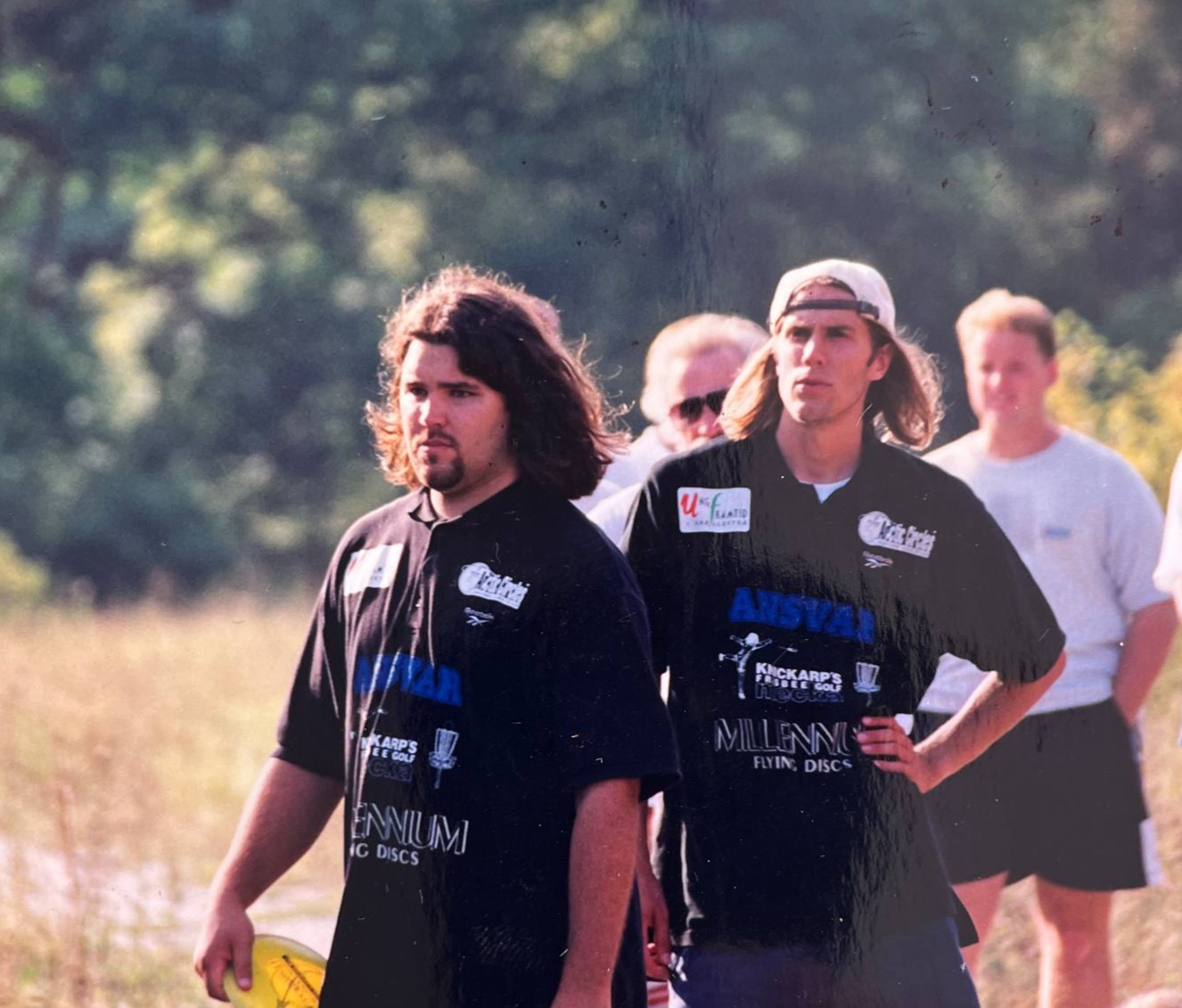
SDGO 1997 Svante Eriksson won the open class. Jesper Lundmark won the junior class.
SDGO 1998, Ron Russel from the USA came second after Tomas Ekström. Ron Russell won the World Championship in 1999 and broke Ken Climo’s streak of consecutive World Championship victories, nine victories from 1990-1998.

In 1998, after much trouble and lobbying, I was able to start the Golf Group under the Individual Committee. The threshold for disc golf to develop on its own was high within the association, but in the end it worked. Other members of the group were Stefan Swärd and Tomas Ekström. In 2001, after further trouble and lobbying, disc golf also managed to get its own committee; the Disc Golf Committee. Soon the sport would arrive at the Swedish Disc Golf Association that Johny Gustafson started in 1979, even though it was not a real association. However, it would take 37 years before disc golf regained some of the focus that was there in 1979 when the Swedish Disc Golf Association was formed in 2016. I was not involved in this process of forming the Disc Golf Association, I had left my association job in committees and the board several years earlier.

We have always had the ambition to highlight the sport and reach a wider audience, a small example is the advertisement we paid for in the free newspaper Metro. There have never been any real financial conditions, so it was done with small means.
SDGO 1999 was won by Anders Swärd in the Open and Niloofar Mossavarahmani won the women’s division.
The regional competition Järva Open, roughly equivalent to C-tier, was first played in the fall of 1999. This year the competition was called DGP Open, but changed to Järva Open 2000. Markus Källström won the Open and Anna Åkesson won the women’s division.
In 2000, a separate Swedish disc golf championship was played at Järva Discgolf Park. The competition was held at the same time as the Stockholm Discgolf Open, as foreign players were excluded from the championship results. Since 1978, the disc golf championship had been held in conjunction with the overall championship, but since 1998 it has been held separately from the other disciplines.
The SDGO was won by Timo Pursio in the Open and Niloofar Mossavahmani in the women’s division. Anders Swärd became the Swedish champion in the open division.
In 2001, Mats was contacted by an advertiser who wanted to feature disc golf in an ad for Volvo. The ad ended up in Cafe Magazine and maybe in a few other places. Unfortunately, Järva Discgolf didn’t really get to be fully featured in the ad. The bag and the discs were Mats’s, but the photo was taken in a regular park and a dog was added.

SDGO 2001 was won by Timo Pursio in the open class. Nilofar Mossavarrahmani won the women’s class.
DiscTV was one of the early forerunners of JomezPro and other video producers. In 2002 they toured the world in a few tournaments and SDGO was one of them. World champion Juliana Korver won the women’s division and Shawn Sinclair won the Open.

Mats produced a series of marketing materials that were financed by the association. For many years, Järva was the marketer of the sport of disc golf in Sweden.
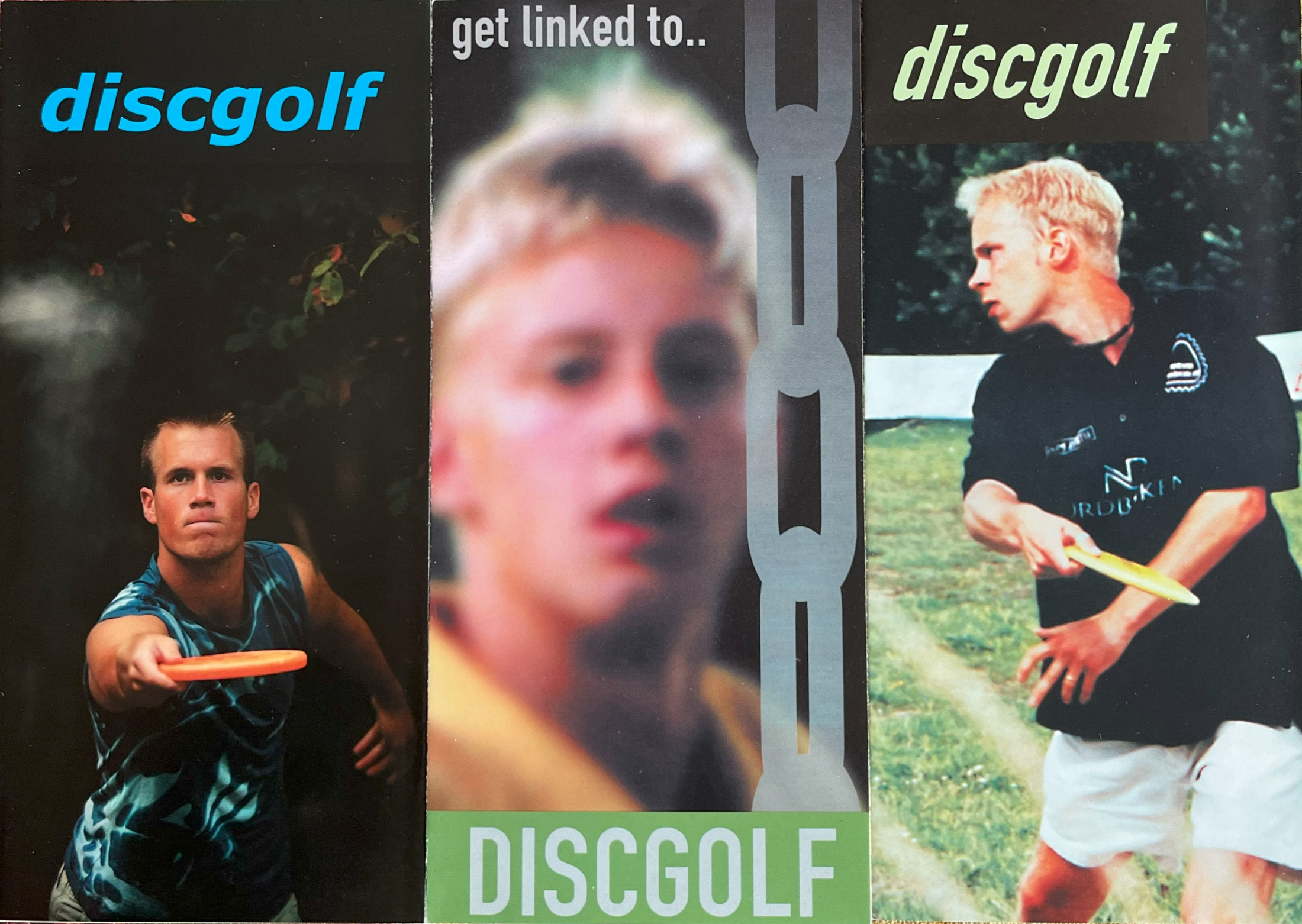
In 2003, Markus Källström won SDGO, Niloofar Mossavarrahmani won the women’s class. Markus also won the Järva Open that year.

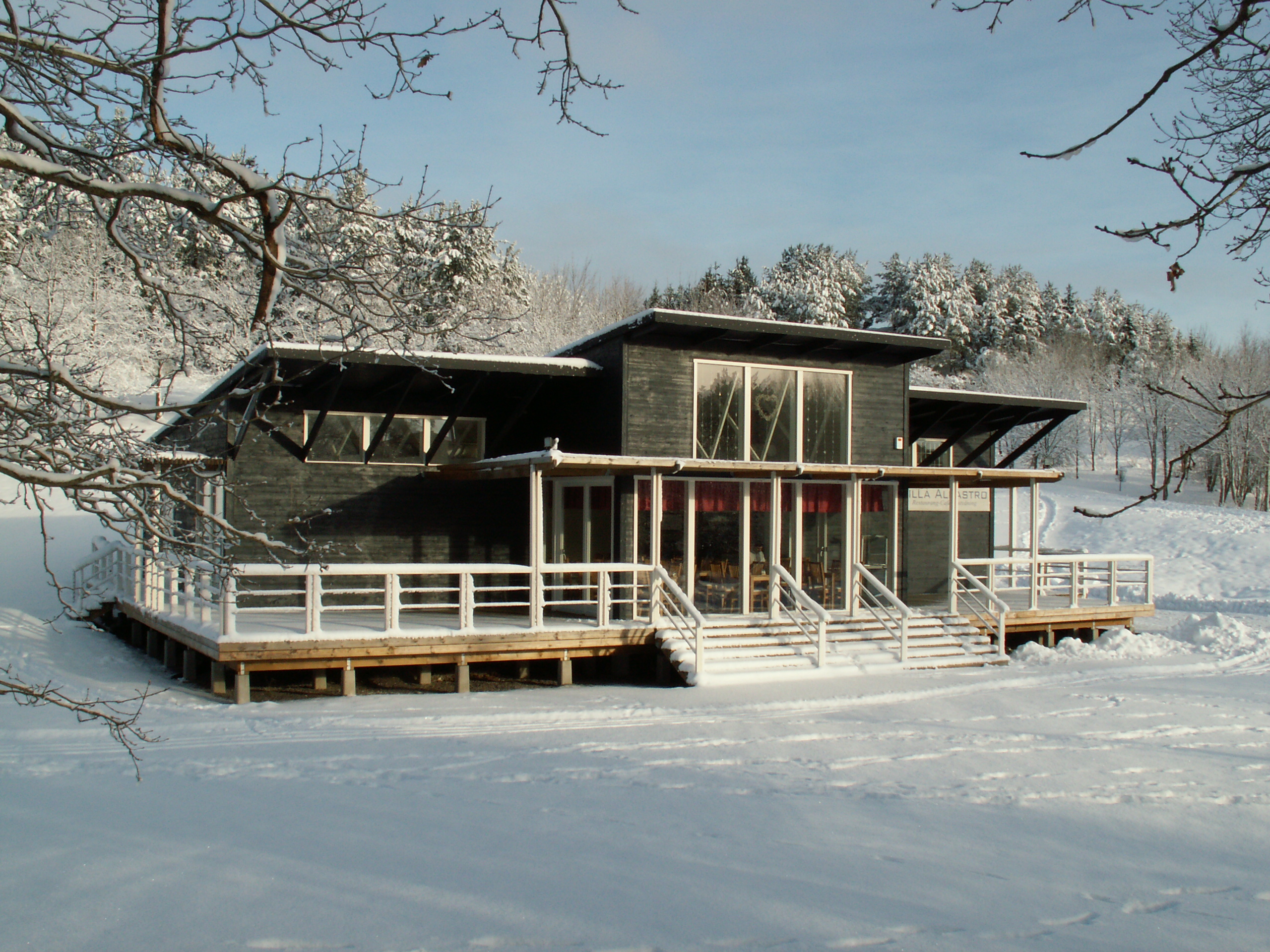
In 2004, Mats designed and built Villa Albastro, the building on the course that contains the disc golf shop and restaurant. A very advanced and daring initiative, it was the first restaurant building to be built at a disc golf course and as far as I know it is still the only one. Järva was thus earlier than the PDGA, which built the International Center with shop and museum in 2007. However, the newly started disc golf course Äppelgården in Sweden, which is located on an old golf course, still has its golf restaurant.
JDGP’s concept is to highlight the arena for disc golf. A well-maintained, attractive and challenging course that can also be played by exercisers. Services such as a disc golf shop, restaurant, toilet, etc.
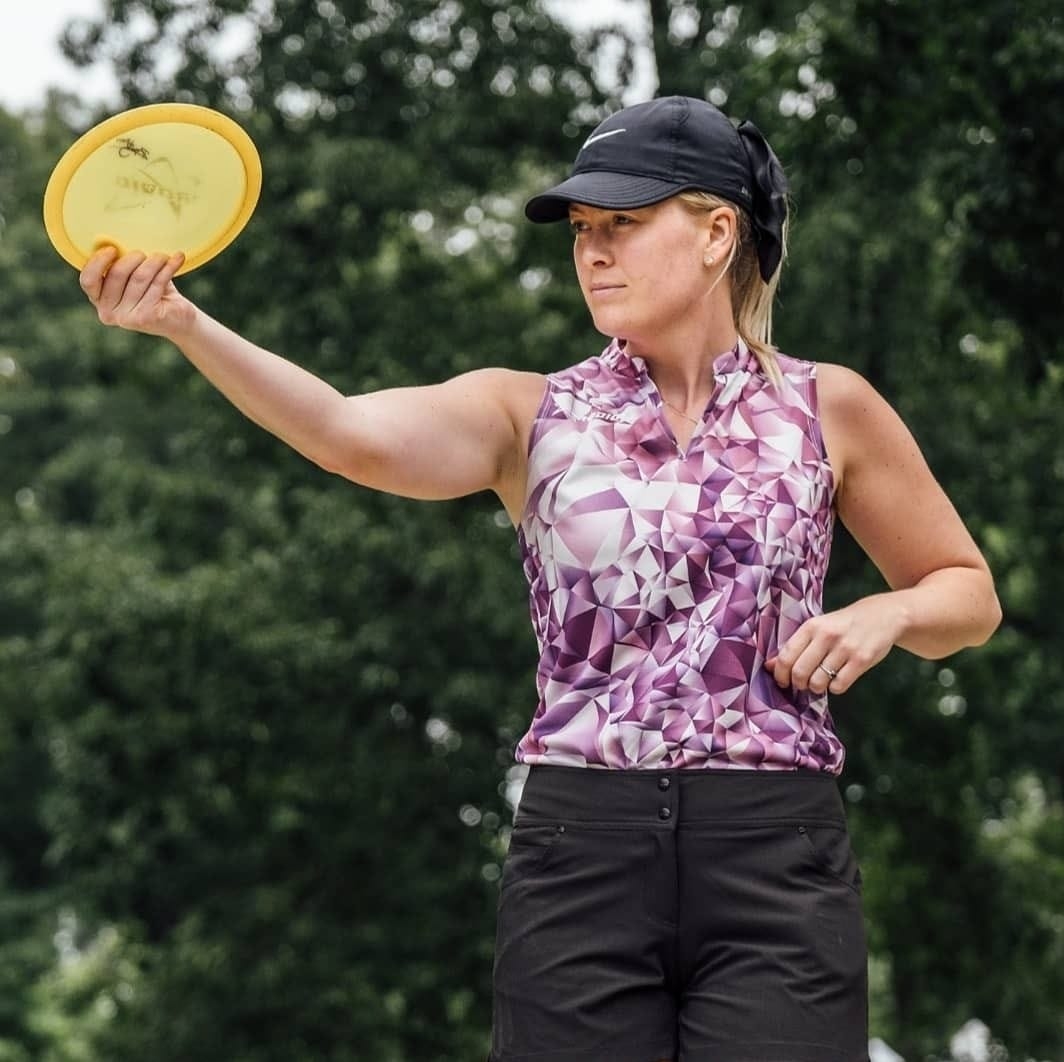
SDGO 2004 was won by Jesper Lundmark and Birgitta Lagerholm. These are considered Sweden’s best players of all time.
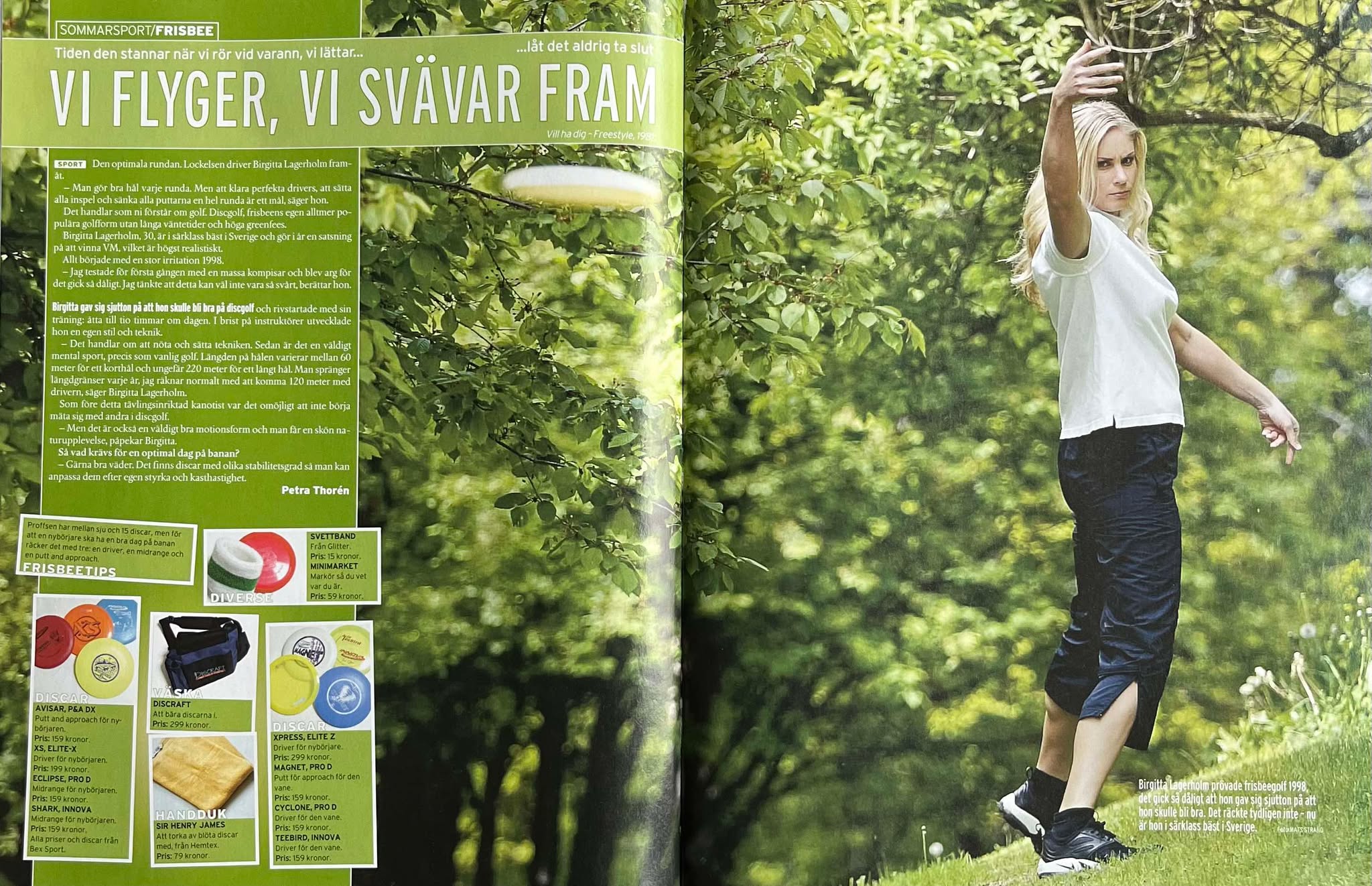
Above, Järva’s Birgitta Lagerholm in Sportbladet July 2004. Photographed at Järva DGP. A month later she won the World Championship, the first World Championship victory for a player outside North America.
Until 2005, SDGO was the disc golf competition in Europe with the highest status, but lost that position when the Jussi Meresmaa European Open began in Finland in 2006. In 2005, Jesper Lundmark and Niloofar Mossavarrahmani won.
In 2006, Christer Christiansson (formerly Köhler) won the SDGO and Birgitta Lagerholm won the women’s division.
The European Open had major status, which opened up the opportunity for SDGO to attract more top American players, as the competition was close in both time and space. In 2007, David Feldberg played SDGO for the first time, finishing second behind Jesper Lundmark. Feldberg won the World Championship in 2008.

In 2008, the world’s best disc golfer of all time, Ken Climo, played. He tied for second with Nate Doss. Jesper Lundmark won.

YouTube appeared in 2005 and within a few years became the main channel for watching videos. However, the disc golf videos were very poor and the presentation of the sport, exercise and recreational activity was at a very unprofessional level. I am not a filmmaker but I still took up this in 2009 and received a financial contribution of 5000 SEK from the Swedish Frisbee Sports Association. I was advised about a filmmaker, Tomas Hammar, who was a disc golfer and a filmmaker for TV4-sporten. Tomas turned out to be a good filmmaker and a few years later started a career as an artist. Tomas had just gotten hold of a “cheap” HD camera that was brand new. Mats and I did a little extra polishing on the holes that were to be filmed and I had thought out a rough script, camera angles etc. Then we drew up the guidelines just before filming and Tomas edited later and also included film clips from the Stockholm Discgolf Open 2009 which he had visited. Birgitta Lagerholm was supposed to be there but had to decline and was replaced by Thea Bygde. A completely new feature was, among other things, stating which discs the players threw and which disc sponsors were in a film.
The film received a lot of views, even outside the disc golf world and lots of praise for its cinematography and image quality. It’s a bit remarkable how such a simple job could have such a relatively big impact and showed a bit of the sport’s often lacking marketing.
Ragna Bygde is one of the more prominent players from Järva. She has, among other things, third place in PDGA World championships in 2014, a gold medal in the Mixed Doubles World Championship in 2014, a European Championship gold medal in 2012 and Swedish Championship gold medals in 2011, 2012 and 2013.

In 2009, the Cemetery Administration showed interest in the park. We thought they would plan a burial ground west of Granholmstoppen on clean, flat land on the edge of the cultural reserve. Järva Discgolf Park is located almost entirely on Granholmstoppen, which is a hilly, unstable, polluted land fill that is dumped on 20 meters deep mud, but that was not the case. There is only a thin layer of soil covering the dump masses and over the years we have seen how unsuitable the land is for building on. For example, at the top of the hill, parts of the land have sunk 3 meters, on holes 3 and 9, parts of the land have sunk 2 meters and between holes 5 and 6, the land has sunk 3 meters since the course opened. These places can be seen as large depressions in the landscape.
In 2010, Simon Lizotte participated in SDGO for the first time and finished in 22nd place. The winners were Nikko Locastro and Birgitta Lagerholm.
2011 was the first year that Paul McBeth played the course under SDGO. He came in fifth place, the winner was Nikko Locastro. Paige Pierce won the women’s class ahead of Ragna Bygde.

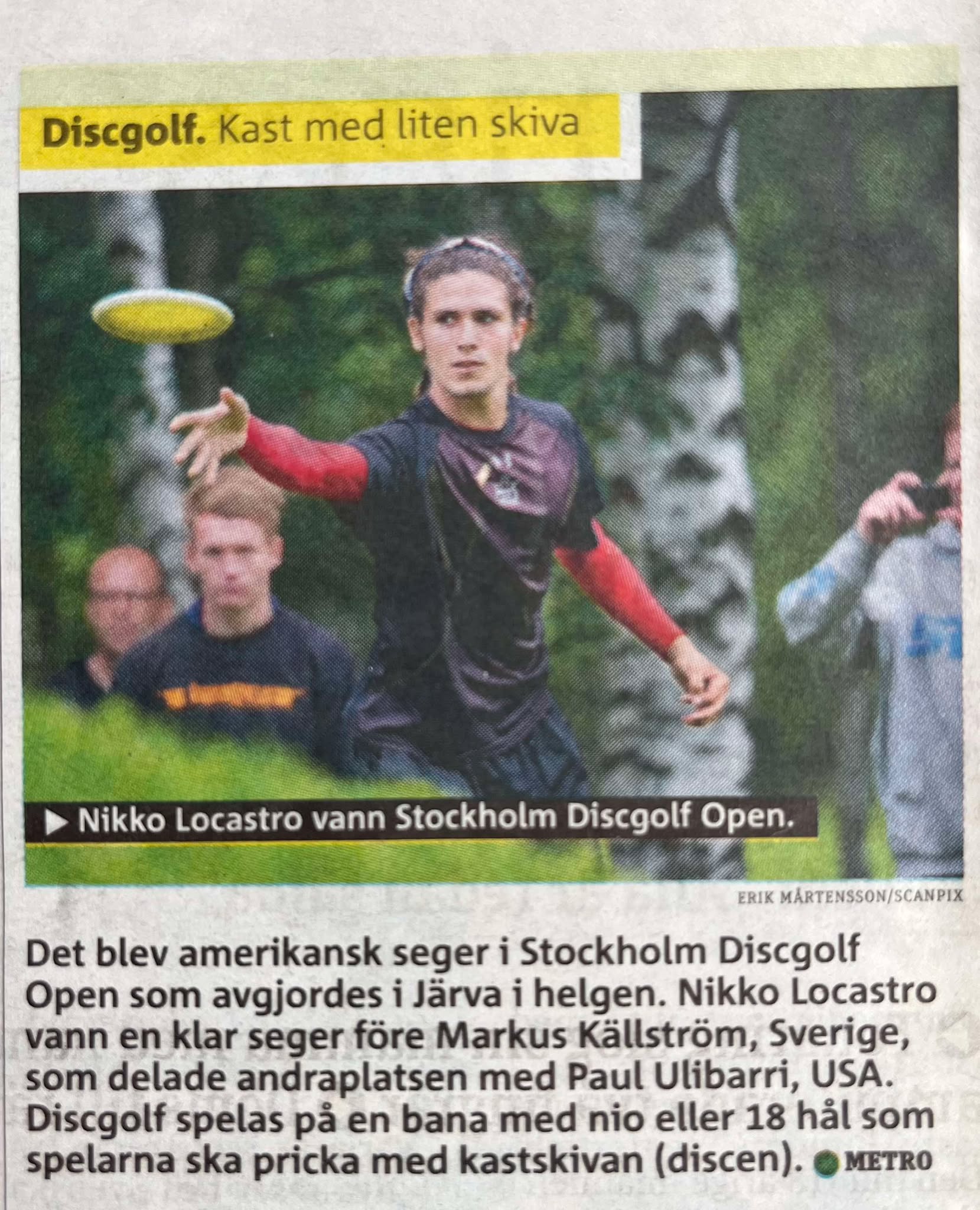
In 2012, SDGO gained major status. Just before the competition was to be decided, the entire building burned down but was then rebuilt for the next season.

SDGO 2012 with major status, filmed by Jörgen Brodén. The competition was won by Will Schusterick and Paige Pierce.

An important part of the design of Järva Discgolf Park has been to be able to accommodate spectators alongside the holes. That is why it is cut out on the edges, in the semi-rough. Also an advantage as there is not so much searching for discs. An audience makes it feel like a greater experience for the players and a higher level of the serious sports part. One occasion when the audience cheers enhanced the sports experience was when David Feldberg made an eagle on hole 8 during SDGO 2013, see the video below.
Järva Discgolf Park began collaborating with Jussi Meresmaa in 2013 and the Discgolf park name was passed on to Jussi’s company Discgolfpark. Jussi received a lot of inspiration from Järva and SDGO and has raised the sport enormously with, among other things, many major events and now in summer 2025; the first PDGA World Championship outside the USA/Canada. Finland’s growth has since spread to, among other things, neighboring Estonia, which now has the world’s best women’s player; Kristin Lätt. In Finland and Estonia, disc golf is a truly great, respected sport and there is a strong community involvement here.

In 2014 and 2016, the European Masters were played at Järva Discgolf Park under the direction of Jussi Meresmaa. The European Open was played every other year at this time. In 2014, Finnish national TV broadcast the last three holes live and SVT play also broadcasted. Now the sport appeared to be very serious and it was played on a permanent disc golf course. A big step for the sport and a big step for us, now we were roughly where we had aimed when the course was started.
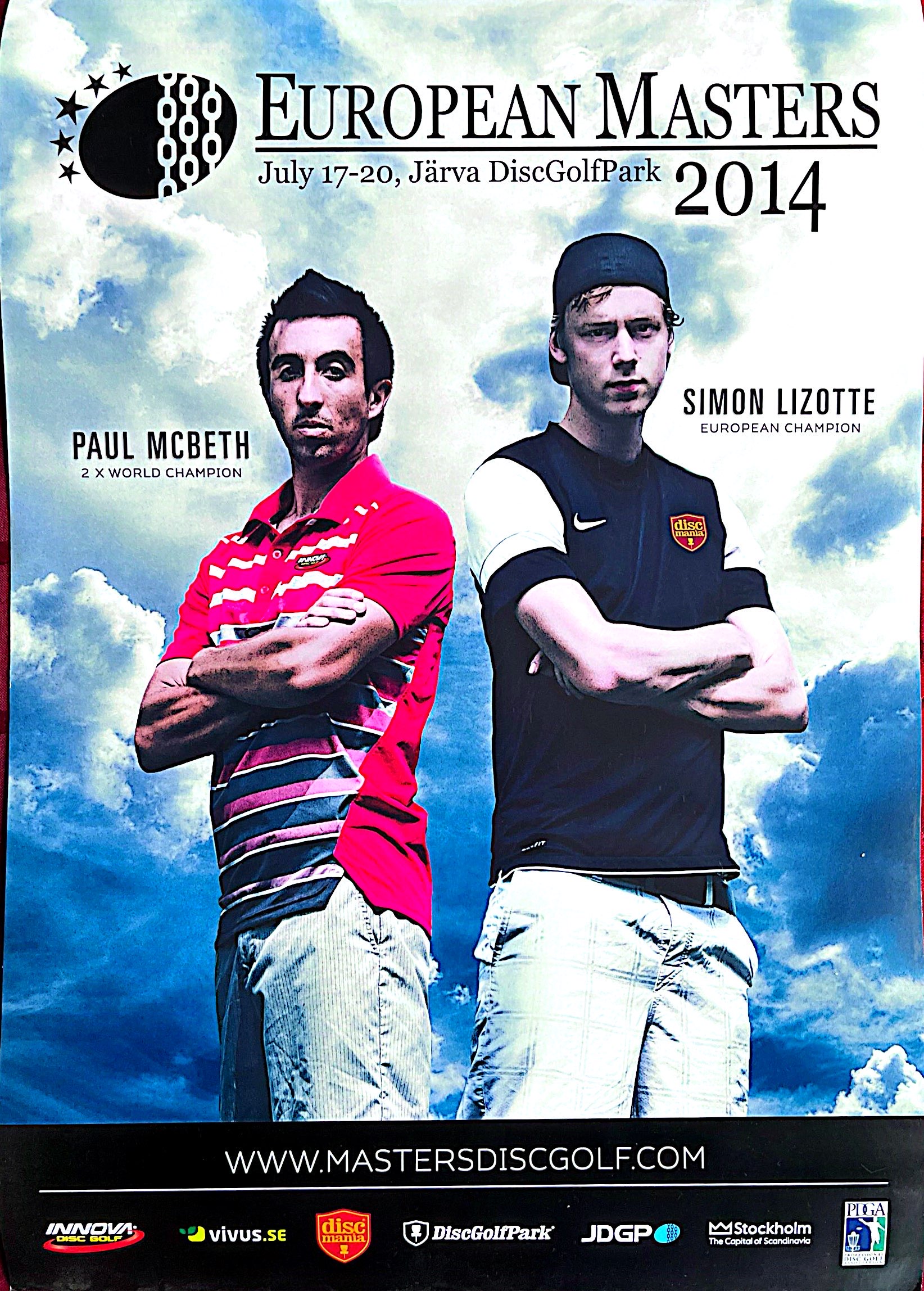
Another big moment during the course’s 30 years was Karl Johan Nybo’s hole in one during the European Masters in 2014.
In 2015, the Swedish Championship was held again at Järva. The competition manager was Peter Bygde. The winners were Dick Lampinen in the open class and Sofie Björlycke in the women’s class.


In 2016 the European Masters was played again. Rick Wysocki won before Paul McBeth. TD was Tommy Bessner.
In 2016, plans for the cemetery took off again. For a while, we thought the politicians had come to their senses, but that was not the case. The future of the course became increasingly uncertain and it became difficult to plan for the future. Jussi’s company Innova Europe also no longer had the financial means to continue running the European Masters.

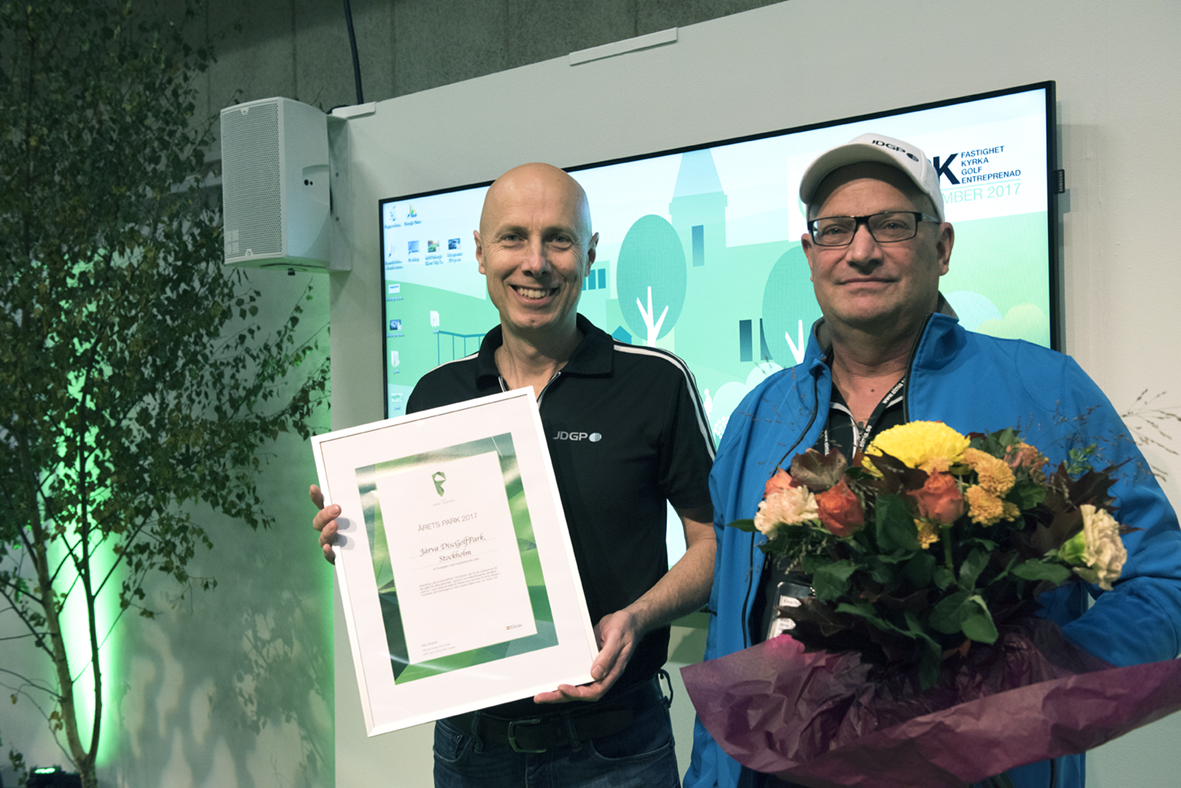
In 2017, the park was chosen as the park of the year in Sweden.

In 2017, the biggest competition of the year was the Järva Open, which was won by Martin Brännström and Malin Sturk.
2018 was a very warm summer, the biggest competition during the year was the Järva Open competition in the Mälartouren and was won by Carl Ulvinen in the Open and Matilda Ringbom in the Ladies.

In 2019, the biggest competition of the year was the Stockholm Discgolf Open, now a part of the National Tour. The TD was Simon Lindgren. Once again, Carl Ulvinen won in the Open and Matilda Ringbom in the Women’s Class.
That same year, world champion Greg Barsby came to visit what he considered to be the best course in the world.
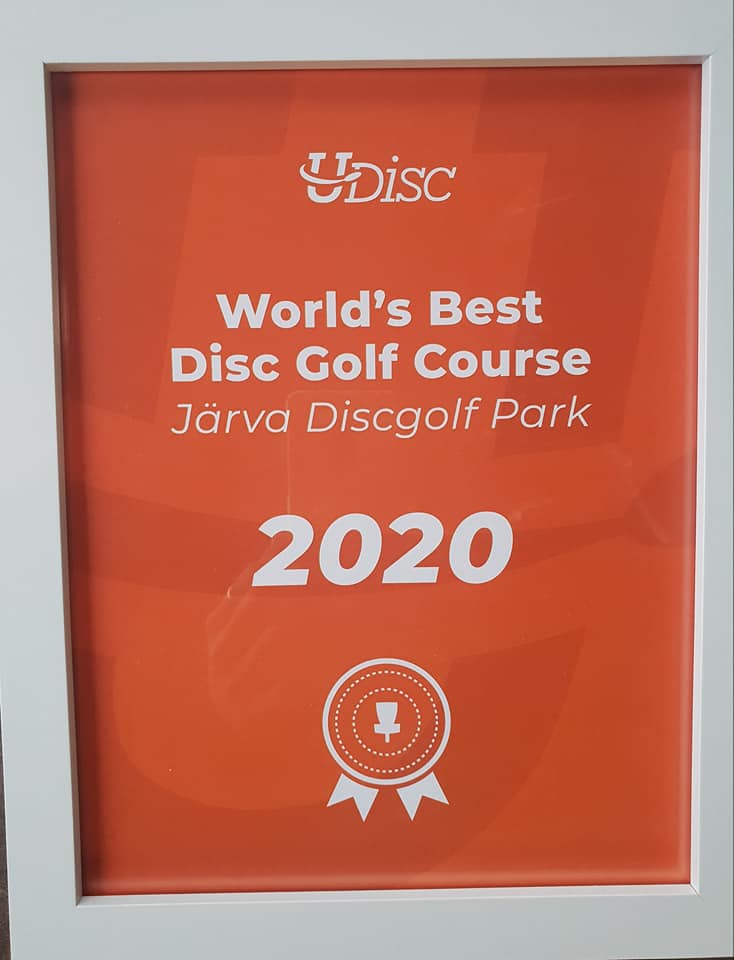
In 2020, the Udisc app began presenting a top list of all the world’s disc golf courses for the first time. Previously, only players had been allowed to rate the course without any compilation. This first year, Järva came in first place, which was a very big success, but at the same time sad because the course had to be demolished in large parts that same year.
In 2020, the course was under threat of being closed down completely, but we managed to convert the remaining land into an 18-hole course plus 9 short holes by spring 2021. This is thanks to the strong public opinion that was and is against closing down the disc golf course and destroying the park. Even SVT Sport had a 4-minute long supportive report about the course on September 18, 2019. In any case, 12 holes disappeared and were replaced by a cemetery. No major competition took place this year due to the uncertainty and the pandemic, but the Järva Open was played and won by Lars Jansson and Birgitta Lagerholm became the best lady. In
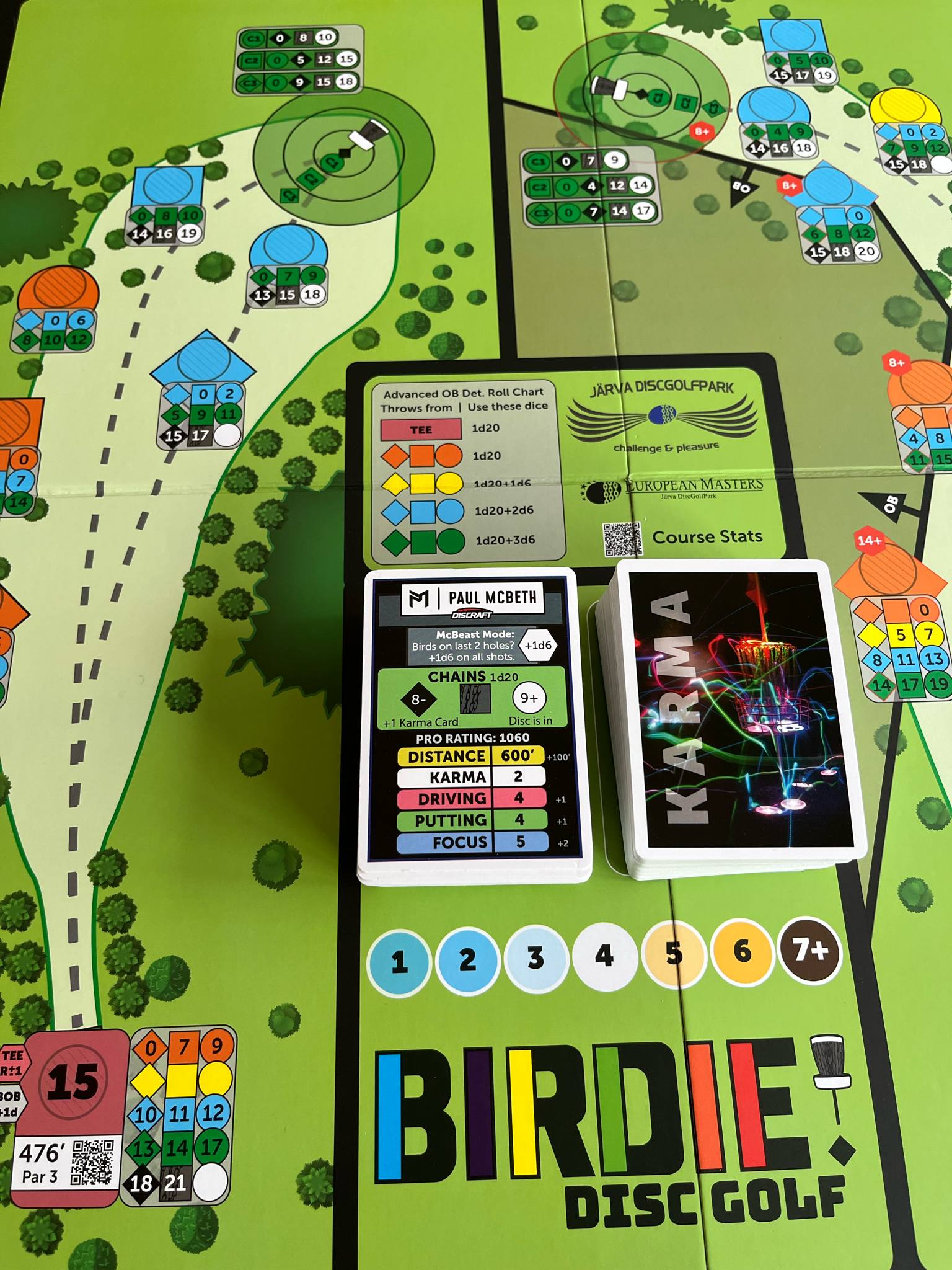
2020, Järva Discgolf Park became one of three courses in the American board game Birdie.

Simon Lindgren started working as a store manager in the fall of 2019 and in 2020, interest in disc golf increased significantly due to the pandemic. Simon also arranged many competitions etc. and became a bit of the face of JDGP for a few years until 2024.
In the fall of 2020, it was decided that the course would be open year-round. This meant new challenges with snow removal from the tees, handling wet soil, etc.
During the years 2022-2024, several major competitions were held on the new course, which almost reached the same level of difficulty as the old master course used in 2016, for example.
In 2021, the order of play was adjusted on some holes to minimize the number of steep slopes on the paths between the holes. The biggest competition of the year was the Järva Open, which was won by Oskar Persson and Ruth Schlissel.
An important part of the course has been that it should be a beautiful environment. One person who appreciated the environment is the artist Daniel Falk, who began his career as a disc golf painter and painted a number of holes during the year.

In 2022, we were filmed by filmmaker Dennis Warsen for the film Discgolf History. The film has not yet premiered, we will see if we get a place in the film.
In 2022, the year’s biggest competition, the Järva Open, was decided. The JO had previously been a smaller competition but now had higher status and was a sub-competition in the European Pro Tour. TD was Anders Pantzer. Knut Valen Håland won in the Open and Kristin Tattar (now Kristin Lätt) won in the Ladies.
This year the Stockholm Discgolf Open also made a comeback, now in the Swedish Disc Golf Pro Tour. Organizer was Michael Bui. Winner was Hjalmar Fredriksson in the Open and Ruth Schlissel in the Women’s class.
In 2022, the first Swedish book about disc golf was published: Discgolfboken and Järva Discgolf Park was included as a section in the book.

During the year, the course was visited by players from 31 countries, which was the most in the world! However, it may have been from more countries as this only applied to players who used the Udisc app. During the year, the course was voted the best course in Sweden.
In 2023, the biggest competition of the year was the Järva Open, again this year a part of the European Pro Tour. The TD was Simon Lindgren. The winner was Luke Humphries in the Open and Olivia Kindstedt in the women’s class.
In 2024 the restaurant was restored and renamed Bistro Järva. The shop was expanded and got an additional room. The biggest competition of the year 2024 was the Järva Open which was now a sub-competition in the Disc Golf Pro Tour. The TD was Simon Lindgren. The winner was Joona Heinänen in the Open and Sofie Björklycke in the Female division.
2025 has now begun and we look forward to many years to come. Finally, some info and pictures of the holes that changed or disappeared in 2020 and the new ones that were added!
Holes that had to be redone:
Hole 15 was removed and the surface is now used for holes 11 and the new 15.
Hole 20 was removed and became two holes, now holes 5 and 6.
Holes 23 and 24 lost a little ground and became two holes, now holes 13 and 14.
Brand new holes are hole 7, hole 12 and hole 15.
In addition, 5 new holes were added to the short-hole course, holes 22-26.
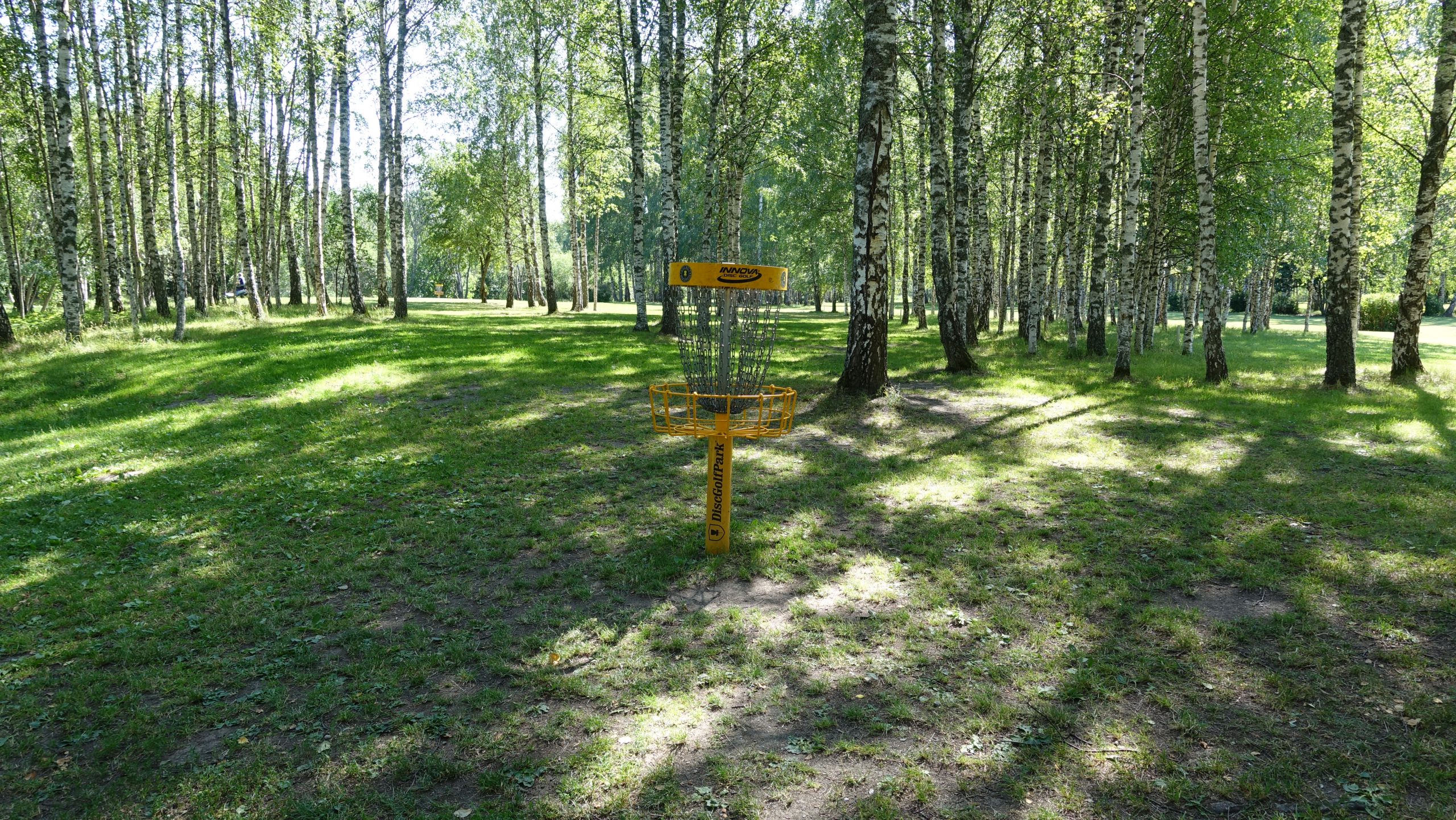
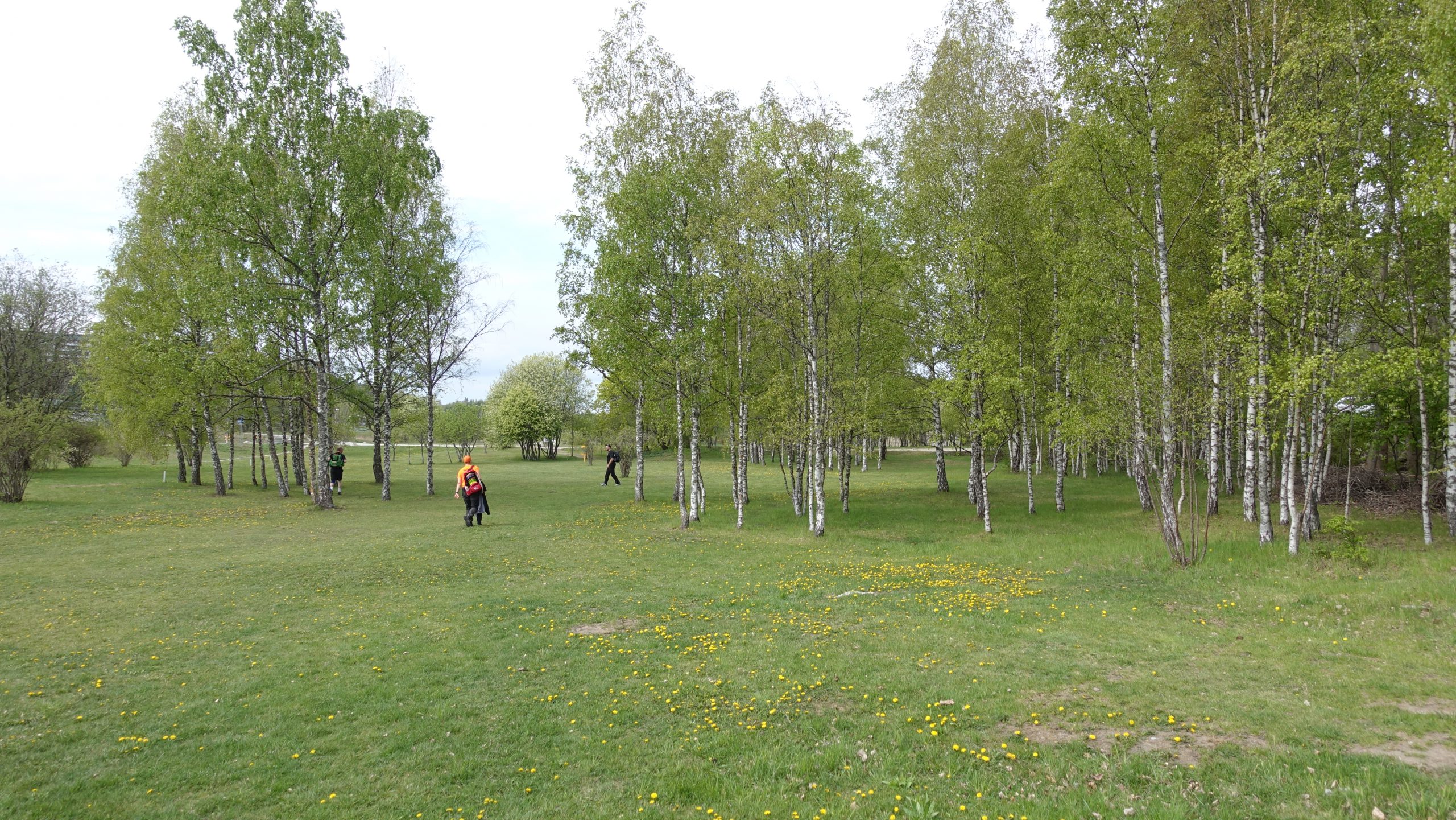
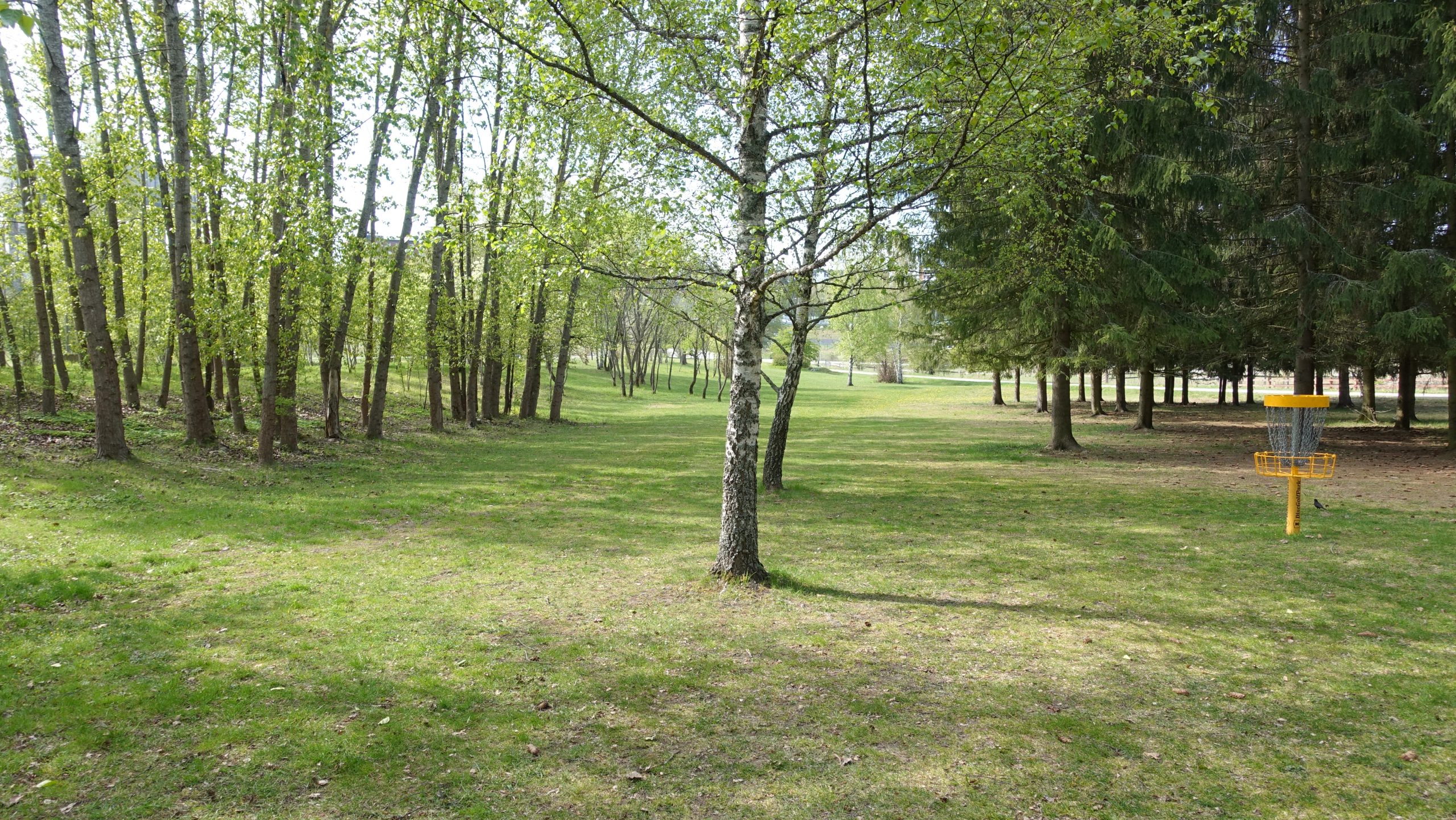
Unfortunately, Järva Discgolf Park lost 12 holes altogether in 2020:

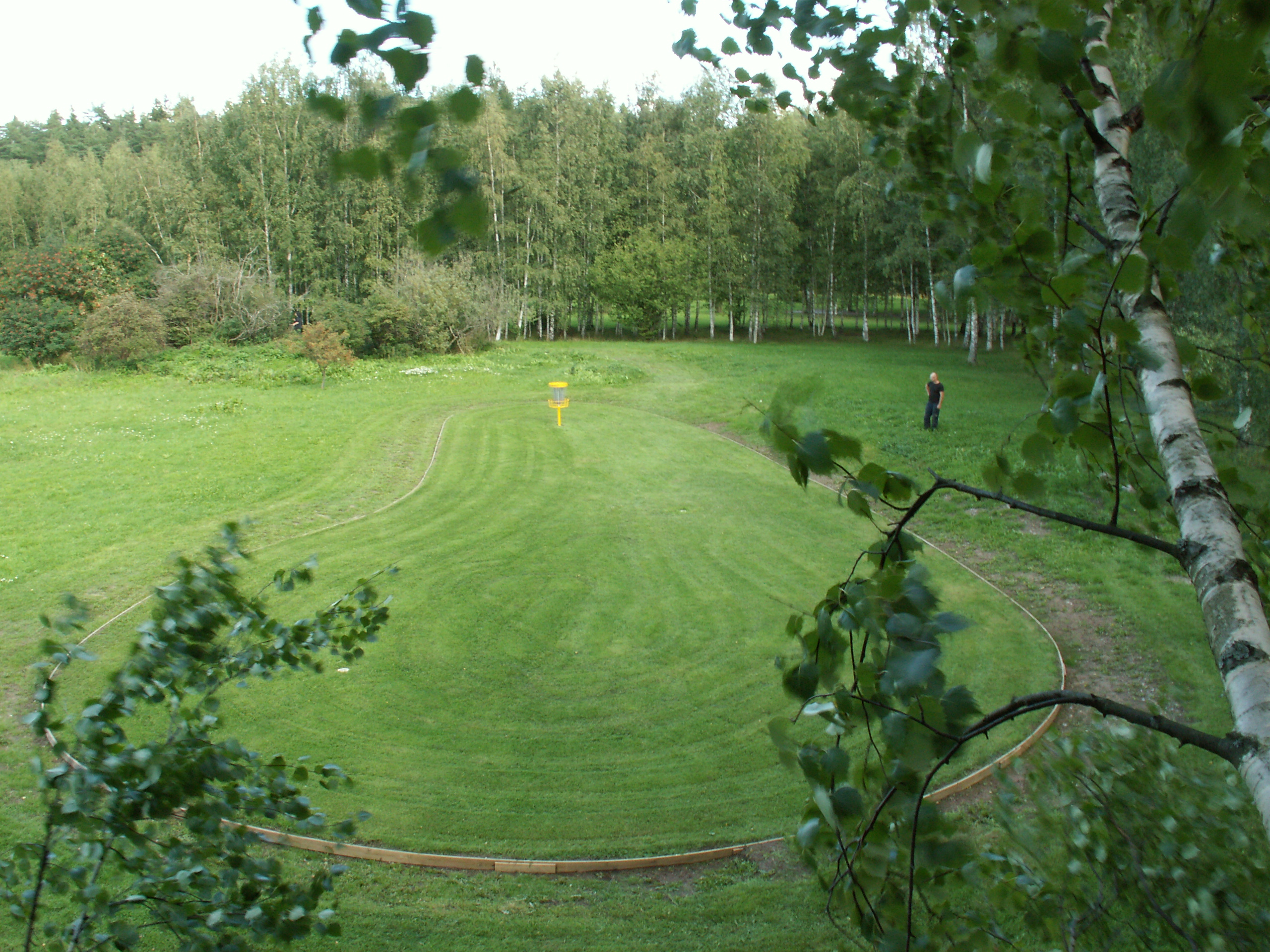
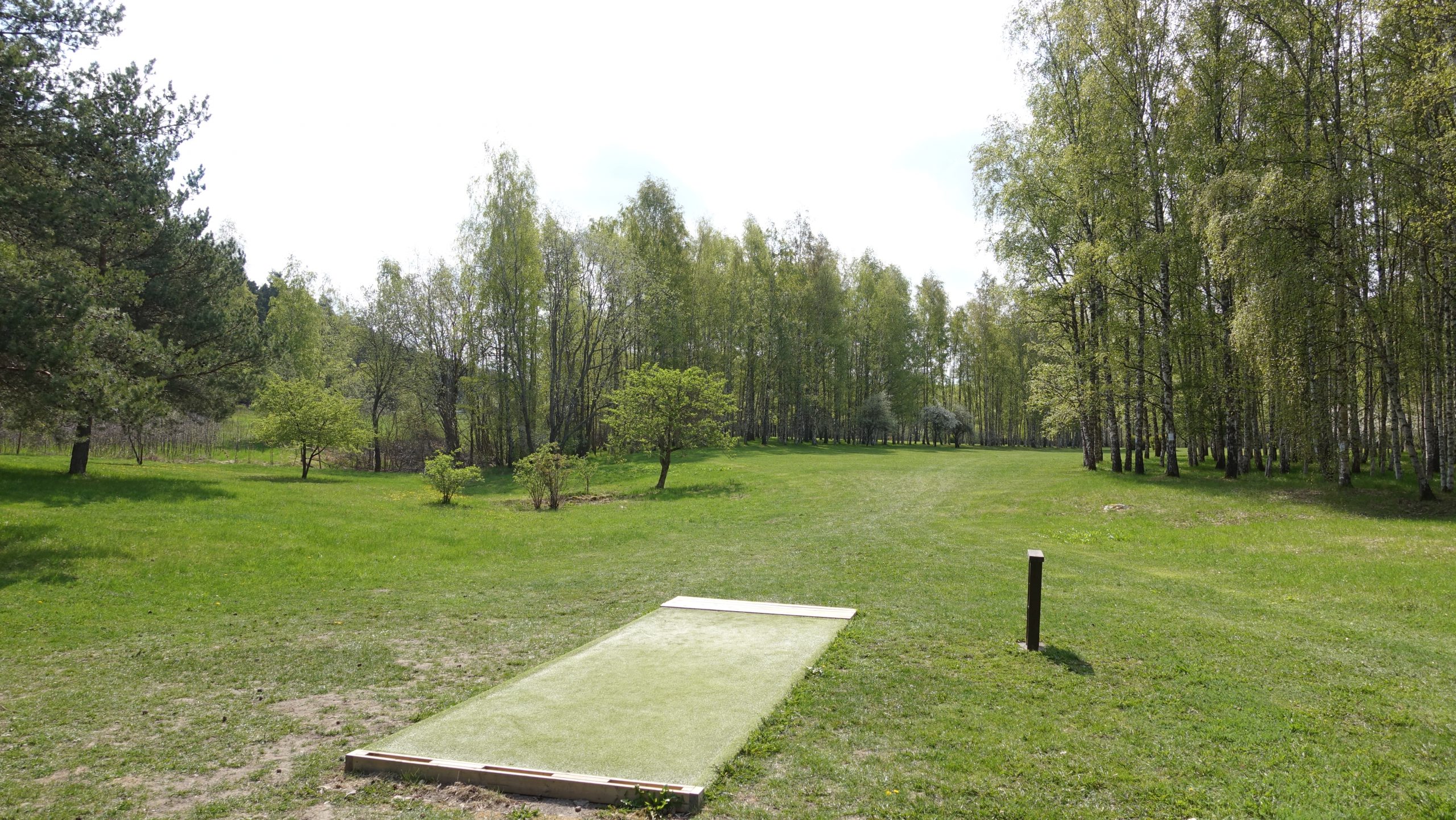
Hole 2, 2019.






See also Järva Discgolf Park 25 years. jarvadiscgolfpark.com/jarva-dgp-25-years/
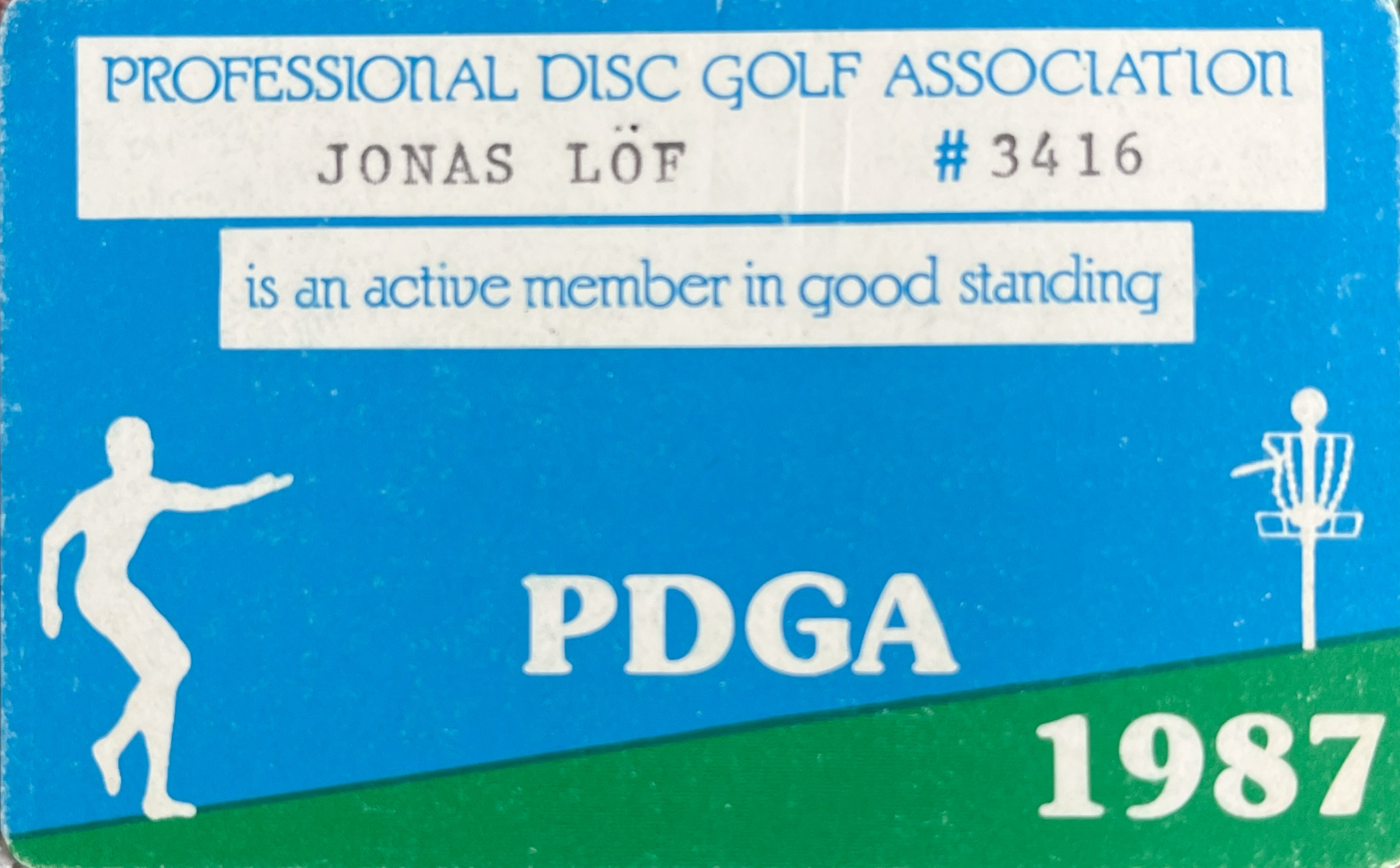
/Jonas Löf, PDGA 3416, WDGHOF